 EN
 中文简体
 English
 русский
 Español
 Português
 عربى


A gas-terminal maintenance crew orders new workwear every eighteen months. The purchase order reads: "fireproof material for clothing, 100% cotton, 320 gsm." The fabric is woven, the garments are sewn, and six months later someone in HSE asks the harder question: what actually happens when a sleeve meets a flash fire, and does that protection survive fifty industrial wash cycles?
The short answer is that no fabric used in clothing is literally fireproof. What you specify is a flame-resistant material — one that resists ignition, stops burning once the ignition source is removed, and does not melt and drip onto skin. Everything else is a question of test methods, standards and service life, which is why two suppliers can both quote "aramid" and still deliver very different levels of protection.
Content
- 1 What a Fireproof Material for Clothing Has to Pass
- 2 The Materials You Will See Quoted, and How They Behave
- 3 Inherent or Treated? The Difference Shows Up in the Laundry
- 4 Matching the Material to the Hazard, Not to the Catalogue
- 5 How Those Fabrics Become a Garment System
- 6 Standards and Certificates: The Part That Decides the Contract
- 7 Where Specifications Usually Go Wrong
- 8 A Short Selection Sequence That Works
- 9 What to Ask the Mill Behind the Fabric
- 10 Frequently Asked Questions
What a Fireproof Material for Clothing Has to Pass
Three test families decide whether a fabric belongs in protective clothing.
- Vertical flame tests such as EN ISO 15025, ASTM D6413 and GB 8965.1. A specimen is exposed to a small flame and the lab records afterflame time, afterglow and char length. Materials that melt — polyester, nylon, untreated polypropylene — either fail outright or drip molten polymer.
- Heat transfer tests under EN ISO 11612, where code letters describe what the fabric resists: A for limited flame spread, B for convective heat, C for radiant heat, D and E for molten aluminium and molten iron splash, F for contact heat.
- Arc and flash-fire tests. ASTM F1959 produces an arc rating in cal/cm², EN 61482-1-2 gives a box-test Class 1 or 2, and NFPA 2112 sets a minimum flash-fire performance measured on an instrumented mannequin.
The practical consequence is simple. A fibre name is not a specification. The certificate, the fabric weight and the code letters tell you what a finished garment will do; the polymer family only tells you where to start looking.
The Materials You Will See Quoted, and How They Behave
Most industrial enquiries land on five or six material families. They differ far more in laundry life, dyeability and cost than in a brochure headline about "fireproof".
| Material | Behaviour in flame | Typical clothing use | Common standard |
|---|---|---|---|
| Meta-aramid and blends | Carbonises, self-extinguishes, no melt-drip | Flash-fire coveralls, welding jackets | EN ISO 11612, NFPA 2112 |
| Para-aramid blends | High strength, keeps a char structure under stress | Arc-rated workwear, cut-risk tasks | ASTM F1959, EN 61482-1-2 |
| Modacrylic blends | Self-extinguishing, takes bright dyes, soft hand | FR high-visibility shirts and jackets | EN ISO 11612 with ANSI 107 |
| FR-treated cotton | Protection carried by a finish, comfortable, absorbs spatter | Welding and general maintenance | EN ISO 11611 |
| Polyimide blends | Very high ignition resistance, stays supple | Heat-exposed and molten-metal-adjacent work | EN ISO 11612 C/E |
| Wool | Naturally ignition-resistant, low char strength | Firefighting underlayers | EN 469 |
| Untreated cotton or polyester | Burns readily, or melts and sticks | Not acceptable as primary protection | Not compliant |
Inherent or Treated? The Difference Shows Up in the Laundry
Inherent FR polymers — aramid, modacrylic, polyimide — carry protection inside the fibre, so the performance is essentially unaffected by washing. Treated fabrics, usually cotton finished with a phosphorus-based system, rely on a chemical finish that can be degraded by strong alkali, bleach or aggressive industrial washing.
That single difference drives most of the commercial decision. Treated cotton is cheaper per metre and comfortable, which is why it dominates welding and general maintenance programmes. Inherent FR costs more up front, but the protection does not wash out, and the fabric can be dyed to stable high-visibility colours with better colour fastness — the reason FR high-visibility garments are almost always modacrylic-based.
One caveat applies to both. A flame-resistant fabric contaminated with oil, grease or solvent can burn regardless of its certification, so laundering procedures belong in the specification, not in a footnote.
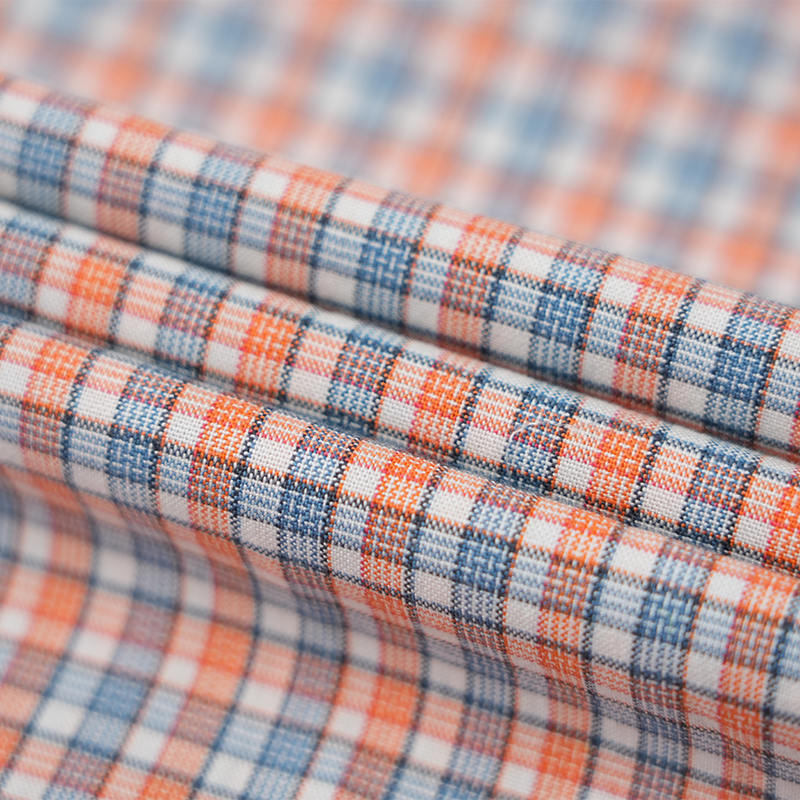 Modacrylic Blended Flame-Retardant Fabrics and Knitted VariantsBrowse modacrylic-blend FR fabrics spanning twill, ripstop, knitted and hi-vis options, including an anti-static variant, for protective clothing specifications.View Product →
Matching the Material to the Hazard, Not to the Catalogue
The same fabric can be excellent in one application and inadequate in the next. Read the hazard first, then the standard, then the material.
- Arc flash — electricians, substations, switchgear. Use arc-rated woven fabric, typically aramid or aramid/viscose blends, with an arc rating that covers the calculated incident energy for the task.
- Flash fire — oil and gas, petrochemical, tank farms. EN ISO 11612 A+B+C or NFPA 2112, usually in the 150–260 gsm range depending on climate and layer count.
- Welding and grinding — EN ISO 11611 Class 1 or 2, with heavier fabric, tight weave and no melt-drip; leather reinforcement at the forearms is common.
- Molten metal splash — EN ISO 11612 codes D and E. The fabric must shed the metal rather than hold it against the skin, so surface structure and weight matter as much as fibre.
- Firefighting and rescue — EN 469 garment systems, normally a three-layer build rather than a single shell.
- Night work with heat risk — FR high-visibility fabric combining EN ISO 11612 with ANSI 107 or EN ISO 20471.
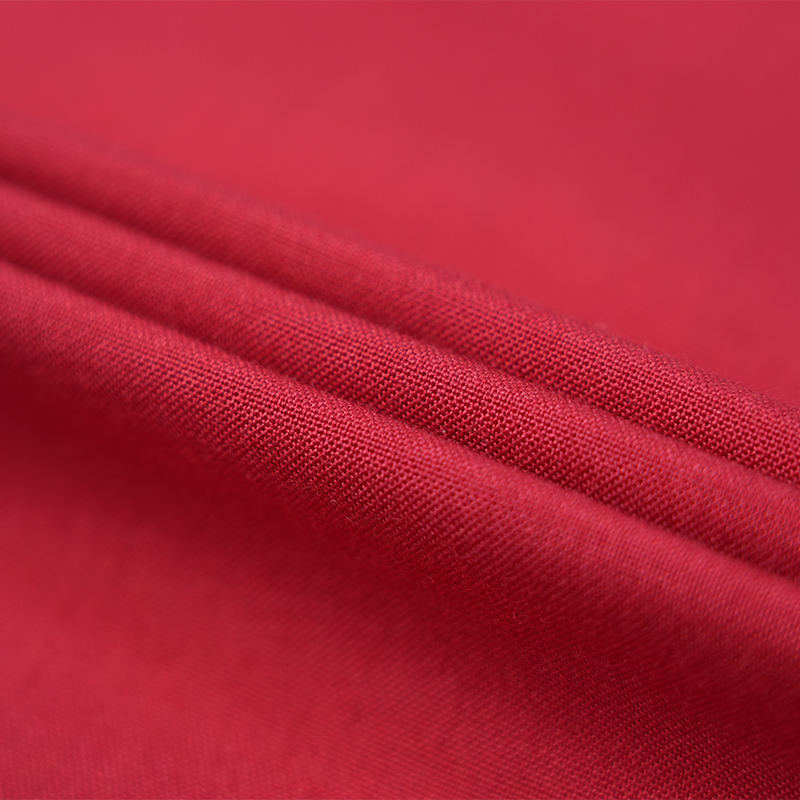 Aramid IIIA Flame-Retardant Fabric for Oil and GasPermanent flame-retardant aramid blend with antistatic carbon fiber, high abrasion resistance and customizable 150–220 gsm builds for protective clothing.View Product →
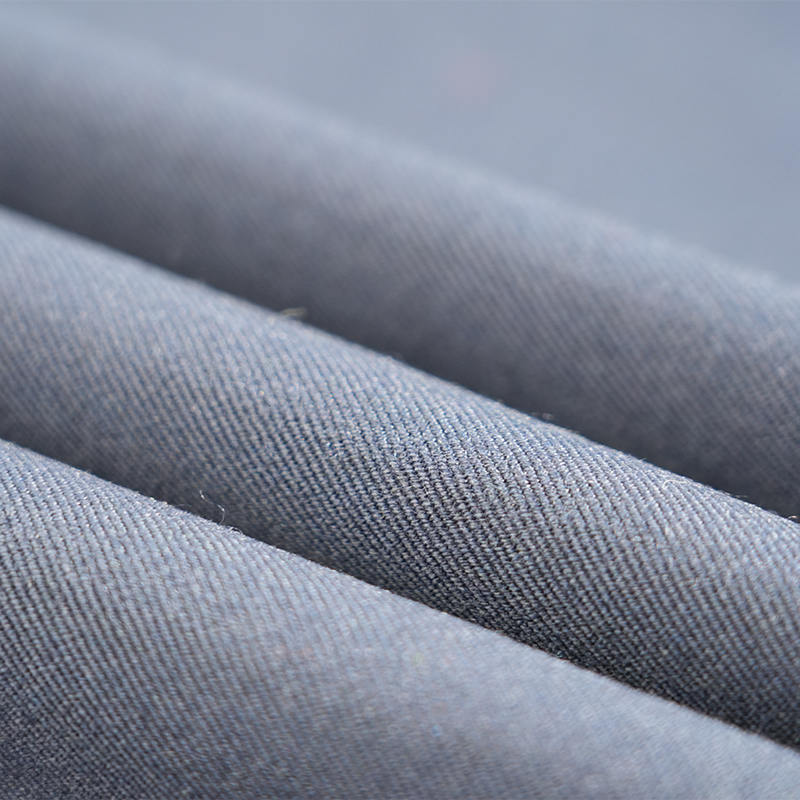 AMT Twill Molten Metal Splash Protective FabricEN ISO 11612 D and E rated twill fabric with anti-drip thermal insulation, offered in multiple weights for foundry and metalworking workwear.View Product →
How Those Fabrics Become a Garment System
A single-layer coverall is the most common industrial build, but firefighting and severe radiant-heat duties use a stack of layers, each with a distinct job. The shell takes the abrasion and the flame contact; the moisture barrier stops steam and liquid; the thermal liner provides the insulating air gap.
The layer count also changes your fabric specification. A shell fabric tested alone may pass a flame-spread test and still fail as a system, which is why EN 469 and NFPA 1971 approve complete assemblies rather than individual rolls.
Standards and Certificates: The Part That Decides the Contract
Protective fabric is a documentation business as much as a textile one. A quote without a test report is an assumption. The standards that appear most often in international tenders are EN ISO 11611 (welding), EN ISO 11612 (heat and flame), EN ISO 1149 (anti-static), EN 469 (firefighting), EN 373 (molten metal splash), EN 61482-1 and ASTM F1959 (arc), NFPA 70E and NFPA 2112 (electrical safety and flash fire), ANSI 107 (high visibility), and the Chinese GB 8965.1 and GB 12014.
Ask three questions before you accept any certificate: does it name the exact fabric article and weight, which test house issued it, and does it cover the colour and finish you are buying? A report for a navy 200 gsm twill does not automatically transfer to a fluorescent yellow 240 gsm version of the same fibre blend. You can review typical documentation sets on our certificate page to see how article-level reporting is structured.
Where Specifications Usually Go Wrong
Most failures we see in the field trace back to the specification document, not to the fabric.
- Naming a fibre instead of a standard. "Aramid" cannot be inspected; "EN ISO 11612 A1 B1 C1" can.
- Ignoring shrinkage and colour change. Garments that shrink 5% after industrial washing no longer cover the wrist, and hi-vis fabric that fades below the required luminance stops being compliant.
- Quoting fabric weight as protection. Two 250 gsm fabrics can differ by an entire code letter.
- Forgetting static. In explosive atmospheres, EN ISO 1149 anti-static performance is not optional, and it interacts with the garment design and the base layer.
- Buying on price per metre. Cost per wear, which includes laundering life and replacement frequency, is the number that reaches the budget.
A Short Selection Sequence That Works
- Write down the hazard: arc, flash fire, radiant heat, spatter, molten metal, or a combination.
- Convert the hazard into the required standard and code letters, with the incident energy or heat flux figures if available.
- Fix the fabric weight range from the climate, the layer count and the discomfort tolerance of the wearers.
- Decide inherent or treated based on laundering conditions and garment life expectancy.
- Check the additional requirements early: anti-static, high visibility, water or oil repellency, stretch for movement.
- Request the test report for the exact article, colour and finish, then confirm the garment maker works to the same assembly.
What to Ask the Mill Behind the Fabric
Behind every certified garment is a fabric mill whose process control decides whether the fifth batch matches the first. 3H Safety Technology Co Limited is a functional fabric manufacturer based on flame retardancy, operating under the product brand "3H. Safeloya"®. The company focuses on product research and fabric production, and adds multiple functions such as anti-static, arc protection, metal splash protection and three-proof finishing according to customer requirements. Its fabrics are used across petroleum, petrochemical, chemical, gas station, power, coal mining, steel, metallurgy and mechanical processing industries.
Related products have been tested by bodies including SGS in Switzerland, TUV in Germany, ITS in the UK and the National Labor Protection Products Quality Supervision and Inspection Center, and meet requirements of EN ISO 11611, EN ISO 11612, EN ISO 1149, EN 469, EN 373, EN 61482-1, ASTM F1959, ASTM F1891, NFPA 70E, NFPA 2112, ANSI 107, GB 8965.1 and GB 12014. Quality management covers full product lifecycle traceability, so a delivered roll can be traced back through production. More background on the company and its manufacturing approach is available on the about page.