 EN
 中文简体
 English
 русский
 Español
 Português
 عربى


A tanker driver clips a grounding clamp to the chassis, then reaches for the hatch. On a dry day the charge carried on a human body can reach 10–30 mJ, while a typical hydrocarbon vapour-air mixture ignites at roughly 0.2 mJ. The distance between those two numbers is exactly what anti static flame resistant fabric is bought to close.
Here is the conclusion first: specify a fabric where static dissipation is built into the weave — a conductive filament grid rather than a surface finish — and where the anti-static claim and the flame-retardant claim are certified on the same sample, after the same wash cycle. If a supplier can only show one of the two reports, you do not yet have dual protection.
That second point trips up more buyers than the first. Flame retardancy and static dissipation are governed by different standards, measured by different methods, and damaged differently by laundering, abrasion and humidity. Treating them as a single tick-box is where the risk sits.
Content
- 1 Anti-Static Performance Is Built Into the Weave, Not Added On Top
- 2 The Standards You Will Actually Be Asked to Prove
- 3 Where You Genuinely Need Both Properties at Once
- 4 Fibre Choice: Where Cost and Comfort Actually Come From
- 5 What a Credible Test Report Should Show You
- 6 A Short Checklist Before You Commit to a Mill
- 7 Frequently Asked Questions
- 7.1 Q1. What is anti static flame resistant fabric?
- 7.2 Q2. Which standard covers anti-static protective clothing?
- 7.3 Q3. Can anti-static FR fabric be washed normally?
- 7.4 Q4. Does anti-static fabric also protect against arc flash?
- 7.5 Q5. How long does the conductive grid last?
- 7.6 Q6. Can anti-static FR fabric be supplied in hi-vis colours?
Anti-Static Performance Is Built Into the Weave, Not Added On Top
Aramid, modacrylic and flame-retardant viscose are all competent insulators. Surface resistance often sits above 1012 Ω, which is excellent for thermal protection and useless for static control. There are only two practical routes down from that number.
- Conductive filament route: carbon-cored polyester, stainless steel or copper sulphide filaments woven into the structure at roughly 5–10 mm spacing. The path to ground is permanent, works in dry air, and survives industrial laundering. The trade-offs are cost, a slightly stiffer hand, and the need to protect the filament from abrasion.
- Moisture route: hydrophilic finishes or high-regain fibres that let adsorbed moisture carry charge away. Cheaper and softer, but performance collapses in dry winter air, cold stores and air-conditioned control rooms.
For fuel terminals, refineries, LPG handling and coal mines, specify the filament route. Where static matters only for product or electronics rather than ignition, the moisture route can be acceptable — but ask which humidity the data was generated at.
Schematic of a woven conductive grid inside an inherently FR base cloth.
One constraint comes with the design. A dissipative fabric only dissipates when the wearer is part of the circuit, so standards such as EN 1149-5 set garment-level requirements: full body coverage, conductive closures, and no insulating layer interrupting the path. That assumes the garment is worn as the outermost layer. A conductive grid hidden under a nylon jacket does nothing at all.
The Standards You Will Actually Be Asked to Prove
Buyers rarely need every standard at once, but they do need to know which report answers which question. The table below maps the ones that appear most often on anti static flame resistant fabric specifications.
| Standard | What it covers | What the report tells you |
|---|---|---|
| EN 1149-1 | Surface resistivity of the material | Material-level resistance; feeds the EN 1149-5 assessment |
| EN 1149-3 | Charge decay | Half-decay time t50; the familiar 4 s figure comes from this test |
| EN 1149-5 | Garment requirements | Pass or fail at garment level, including design |
| GB 12014 | Chinese anti-static protective clothing | Surface resistance and charge density limits |
| EN ISO 11612 | Heat and flame protection | Performance codes such as A1, A2, B, C, E, F |
| EN ISO 11611 | Welding and allied processes | Class 1 or Class 2 |
| NFPA 2112 | Industrial flash fire | Pass or fail, with heat transfer performance reported |
| EN 61482-1-2 / ASTM F1959 | Arc thermal performance | APC class from the box test, or ATPV / ELIM in cal/cm² |
Where You Genuinely Need Both Properties at Once
Static only matters where a flammable atmosphere or a sensitive device is present. Flame resistance only matters where there is heat, flame or an arc. The overlap is narrower than most catalogues suggest, and it shows up in a predictable set of workplaces:
- Fuel terminals, tanker loading, LPG and aviation fuelling
- Refineries, petrochemical plants and solvent handling
- Coal mining, where methane and dust create both hazards
- Spray booths, powder handling and paint lines
- Live electrical work, where arc exposure and body charge coexist
In electrical work, never let an anti-static claim stand in for an arc rating. They are separate tests with separate numbers, and a fabric that dissipates charge still has to clear an arc threshold on its own. NFPA 70E sets four arc-rated clothing categories, and the chart below shows the minimum arc rating each one demands.
NFPA 70E arc-rated PPE categories (minimum arc rating, cal/cm²)
Source: NFPA 70E arc-rated clothing category thresholds.
 Electric Arc Protection FR Fabric for High-Voltage WorkwearBrowse arc-rated FR fabrics tested to EN 61482, with twill, ripstop and plain constructions for power-industry protective clothing.View Product →
In practice, most electrical buyers end up choosing between treated cellulosic blends for lighter duty and aramid-based constructions where arc ratings above 8 cal/cm² are required. Ask for the ATPV or ELIM value on the exact quality and weight you are ordering, not on a neighbouring article.
Fibre Choice: Where Cost and Comfort Actually Come From
Almost all anti static flame resistant fabric sold into industry sits on one of four fibre platforms. The differences matter less for the FR performance than for comfort, dyeing, mechanical life and price.
| Fibre platform | Strengths | Limits to plan for | Typical use |
|---|---|---|---|
| Modacrylic / cotton | Soft hand, good value, inherently FR | Lower arc ratings; still needs a conductive grid | General workwear, light welding |
| Aramid IIIA | High strength, high arc and heat performance | Higher cost, narrower shade range, stiffer hand | Electrical, oil and gas, military |
| Aramid / FR viscose | Better comfort and moisture management | Lower mechanical strength than pure aramid | Coveralls, general FR workwear |
| Polyimide blends | Excellent heat resistance, soft handle | Cost and limited colour options | High-heat industrial exposure |
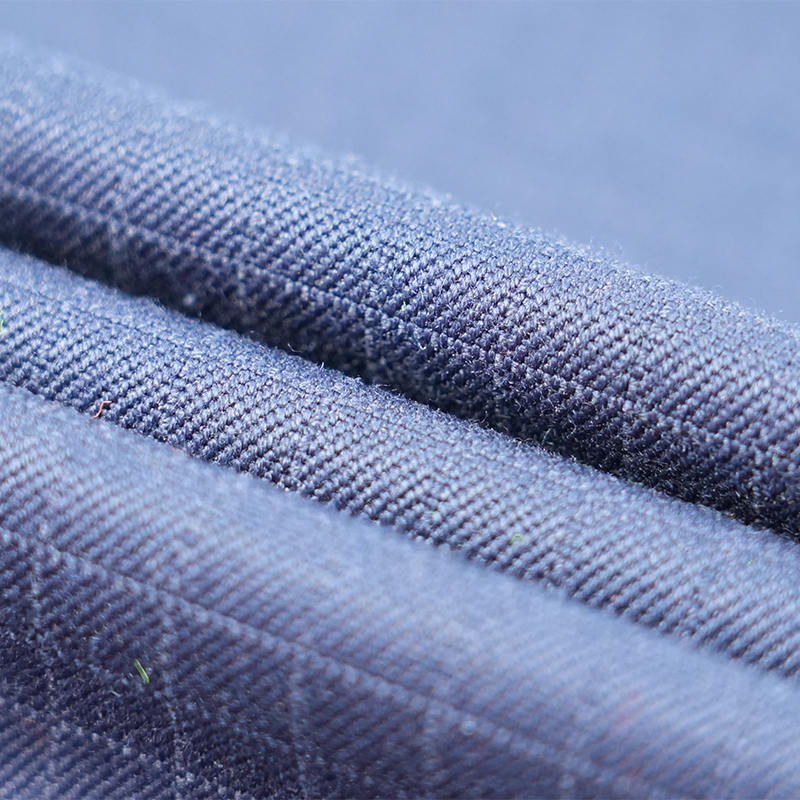
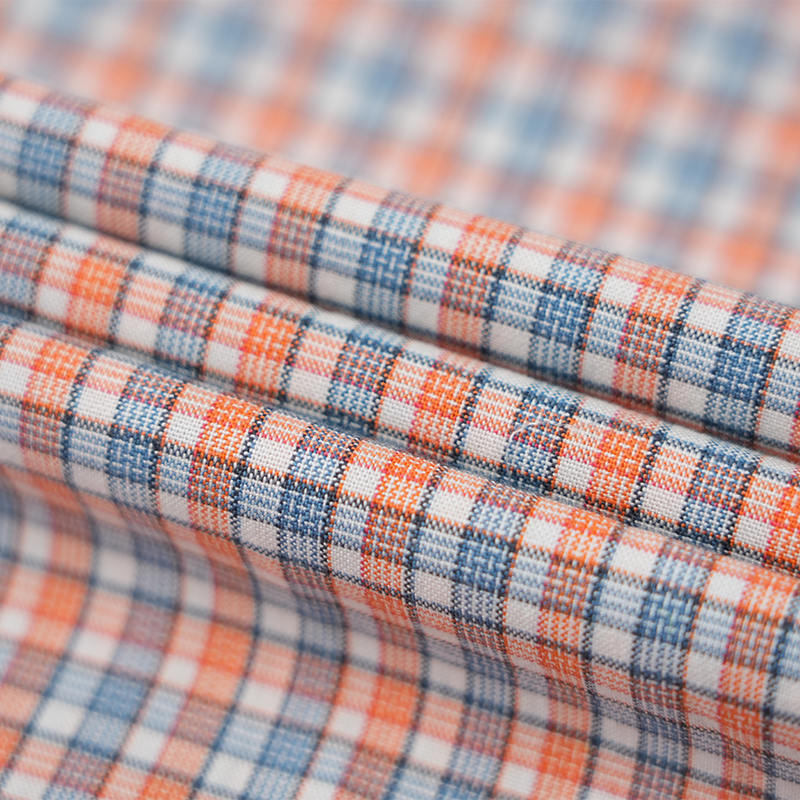 Modacrylic and Cotton Flame-Retardant Protective FabricModacrylic/cotton blends for protective workwear, combining breathable cotton comfort with flame retardancy described as stable after repeated washing.View Product →
Modacrylic and cotton blends carry most of the volume because the FR performance is inherent to the fibre rather than a finish, which keeps the protection stable across washes. Aramid IIIA remains the default where arc ratings and mechanical durability both matter. Neither dissipates static by itself — that still comes from the grid.
What a Credible Test Report Should Show You
Most sourcing disputes do not start with a failed fabric; they start with a report that answered a slightly different question than the buyer asked. Five checks catch nearly all of them:
- Same sample, same wash cycle. The anti-static result and the FR result should reference the same quality and the same laundering protocol — typically 5, 25 or 50 cycles depending on the standard.
- Named laboratory and scope. SGS, TUV, ITS or a national labour protection testing centre; the report should identify weight, shade and test date.
- Performance after abrasion or washing. Charge decay on a brand-new swatch tells you little about month twelve.
- Mass and shrinkage tolerance. A 3–5% weight deviation shifts arc rating and static behaviour together.
- Colour performance where high visibility is involved, since both EN ISO 20471 and ANSI 107 require colour retention after cleaning.
Night work stacks a third requirement on top of the first two: flame resistance, static dissipation and high visibility in one cloth. That combination is genuinely difficult, because fluorescent shades and FR chemistry do not always coexist comfortably, and the colour has to survive the same wash cycles as the protection.
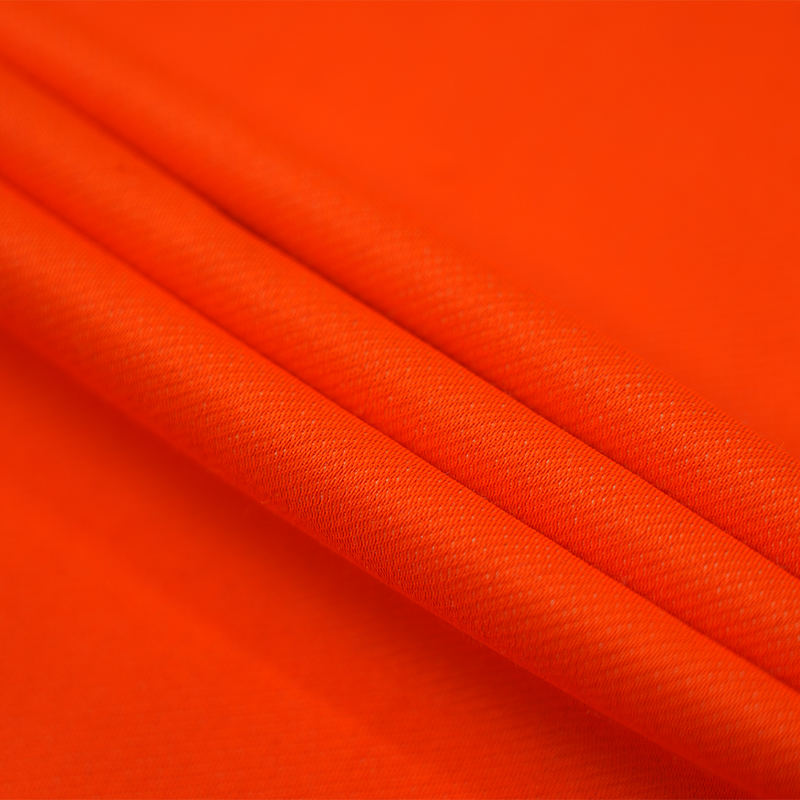 QFU-05 FR Hi-Vis Anti-Static Protective FabricFlame-retardant, anti-static hi-vis fabric for low-visibility hazardous work, available in 230–300 gsm and intended to retain protection and colour after repeated washing.View Product →
Where a specification asks for all three, test the colour after cleaning at the same time as the charge decay — otherwise the garment passes on paper and fails on site six months later.
A Short Checklist Before You Commit to a Mill
- Ask for the datasheet and test report for the exact quality, not the product family.
- Request a 1–2 m sample and wash it in your own laundry process before scaling up.
- Get the anti-static mechanism confirmed in writing: conductive filament or moisture route.
- Agree acceptance tolerances for weight, shrinkage and colour in the purchase order.
- Check that the certificate scope matches the standard you are being asked to meet.
3H Safety Technology Co Limited is a functional fabric manufacturer based on flame retardancy, operating under its product brand "3H. Safeloya" ®. The company develops and produces fabrics from the base cloth up, adding anti-static, arc protection, molten metal splash resistance and water, oil and stain repellency to customer requirements. Its materials are used across petroleum, petrochemical, chemical, gas station, power, coal mining, steel, metallurgy and mechanical processing environments.
Products have been tested by SGS in Switzerland, TUV in Germany, ITS in the UK and the National Labor Protection Products Quality Supervision and Inspection Centre, and meet requirements including EN ISO 11611, EN ISO 11612, EN 1149, EN 469, EN 61482-1, ASTM F1959, ASTM F1891, NFPA 70E, NFPA 2112, ANSI 107, GB 8965.1 and GB 12014. Quality management runs through full product lifecycle traceability, which is usually the difference between a certificate you can defend in an audit and one you cannot. You can read more on the company and its manufacturing background, and check the credentials themselves on the certificate page.
Frequently Asked Questions
Q1. What is anti static flame resistant fabric?
A woven or knitted textile that combines flame retardancy with controlled electrical dissipation. In most industrial qualities the FR performance comes from inherently flame-retardant fibres, while static control comes from conductive filaments woven into the cloth.
Q2. Which standard covers anti-static protective clothing?
EN 1149-5 sets the garment-level requirement, supported by EN 1149-1 and EN 1149-3 as test methods. GB 12014 applies in China. NFPA 2112 covers flash fire but does not replace a static test.
Q3. Can anti-static FR fabric be washed normally?
Follow the care label. Industrial laundering is assumed by most specifications, and fabric softeners or poorly rinsed detergent can leave insulating residue on the surface. Rinse thoroughly and avoid softener entirely.
Q4. Does anti-static fabric also protect against arc flash?
No. Arc ratings come from ASTM F1959 or EN 61482-1-2 and are quoted separately as ATPV, ELIM or APC class. Static dissipation and arc protection are tested by different methods and must be confirmed independently.
Q5. How long does the conductive grid last?
With a carbon-cored filament construction it generally lasts the service life of the garment. Degradation appears as a rising charge decay time, so re-testing after extended industrial washing is the reliable check.
Q6. Can anti-static FR fabric be supplied in hi-vis colours?
Yes. FR hi-vis qualities combine fluorescent shades with anti-static and flame-retardant performance, and should be tested for colour retention after cleaning to EN ISO 20471 or ANSI 107.
Anti static flame resistant fabric is a small category with a large failure cost. The purchasing decision usually comes down to three questions: is the dissipation path permanent, are both claims certified on the same sample, and does the fabric still perform after the wash cycles your laundry actually runs?
Answer those before you discuss price per metre, and the rest of the specification tends to fall into place.