 EN
 中文简体
 English
 русский
 Español
 Português
 عربى


Polyester is not fire resistant in its standard form. Plain polyethylene terephthalate, the PET that makes up most workwear linings, hi-vis shells and coveralls, has a limiting oxygen index of roughly 20 to 21 percent, and ordinary air is about 21 percent oxygen. A fibre whose LOI sits at or below the oxygen level of the room it is worn in will keep burning once a strong enough ignition source touches it. It simply burns differently from cotton: it melts, shrinks and drips instead of charring.
That does not make polyester a poor choice for protective clothing. It makes the letters "FR" on a specification sheet something you have to verify. Modified FR polyester, FR-finished polyester and polyester blended with modacrylic or aramid behave very differently from the commodity fibre, and the gap between those three categories is where most specification errors and warranty disputes begin.
Standard polyester is flammable but hard to ignite. Modified FR polyester self-extinguishes. FR-treated polyester sits in between and depends on how many washes it survives. Only a test report against a named standard tells you which one you actually bought.
Content
- 1 The short answer, with numbers
- 2 What actually happens when polyester meets a flame
- 3 Three routes to flame-resistant polyester
- 4 What the standards require before a fabric can be called FR
- 5 Where flame-resistant polyester earns its place
- 6 Six checks before you approve a polyester FR fabric
- 7 How a three-layer FR polyester assembly works
- 8 Where 3H Safety fits in the supply chain
- 9 Frequently asked questions
The short answer, with numbers
Three terms get used interchangeably on sales pages, and they are not the same thing.
- Flame resistant (FR): the material resists ignition and stops burning on its own once the flame source is removed. This is a performance claim that must be backed by a standard.
- Flame retardant: strictly speaking a chemistry or a finish added to delay ignition and slow flame spread. It may or may not survive laundering.
- Fireproof: essentially non-combustible. No conventional workwear textile, polyester or otherwise, reaches this level, although the word appears regularly in product copy.
The reading is simple. Anything hovering around 21 percent, such as standard polyester, cannot be trusted to self-extinguish. Move the figure towards 28 percent and above, and the material starts to starve the flame of oxygen on its own.
What actually happens when polyester meets a flame
Polyester does not char like cellulose. It softens and melts at roughly 250 to 260 degrees Celsius, shrinks away from the heat source and can drip. That behaviour creates three separate risks that a simple afterflame number does not capture.
- Contact burns from molten polymer. Dripping polyester can stick to skin and keep transferring heat after the fabric has pulled away.
- Seam and shell failure. Thermal shrinkage can open a seam or pull a sleeve short before any flame reaches the body.
- The blend trap. In a polyester-cotton blend, the cotton chars and holds the flame in place while the polyester melts and feeds it. Blends without an FR component are frequently worse than either fibre alone.
This is why the phrase "inherently flame retardant polyester" appears in some textile glossaries and confuses buyers. It usually means the fibre does not flash-burn the way untreated cotton does. It does not mean the fabric is compliant with EN ISO 11612 or NFPA 2112.
Three routes to flame-resistant polyester
1. Modified polyester, where FR is built into the polymer
Phosphorus is copolymerised into the polyester chain during polymerisation, so the FR behaviour is part of the fibre rather than a coating on it. It survives industrial laundering, has no finish to wear off and handles abrasion well. The trade-off is cost, limited colour flexibility and slightly lower tenacity than standard PET.
2. Finishes, back coatings and lamination
Topical finishes and back coatings are applied after dyeing or during finishing. They are economical and useful for non-wash-critical items such as curtains or drapes, but performance falls with repeated washing and dry cleaning. If a supplier quotes a flame test without stating the laundering condition, ask for the results after 50 industrial cycles to EN ISO 15797.
3. Blending with modacrylic, aramid or FR viscose
This is the route most protective workwear takes. Modacrylic supplies the self-extinguishing backbone, polyester contributes strength, abrasion resistance and colour, and FR viscose improves moisture management and hand feel. A typical FR hi-vis shell uses a modacrylic, polyester and cellulose blend precisely because no single fibre delivers visibility, comfort and flame performance together.
| Route | Durability | Typical composition | Best fit | Watch out for |
|---|---|---|---|---|
| Modified FR polyester | Lasts the life of the garment | FR polyester alone or blended with FR viscose | Hi-vis shells, liner fabrics, high-wash programmes | Higher price, narrower shade range |
| Blends with modacrylic or aramid | Permanent, fibre-based | Modacrylic / polyester / cellulose, aramid blends | Welding, electrical, oil and gas, hi-vis | Blend ratio must be fixed and traceable |
| Finish or back coating | Declines with washing | Standard polyester plus chemical finish | Drapes, linings, low-wash applications | Stiff hand, finish loss, uneven coverage |
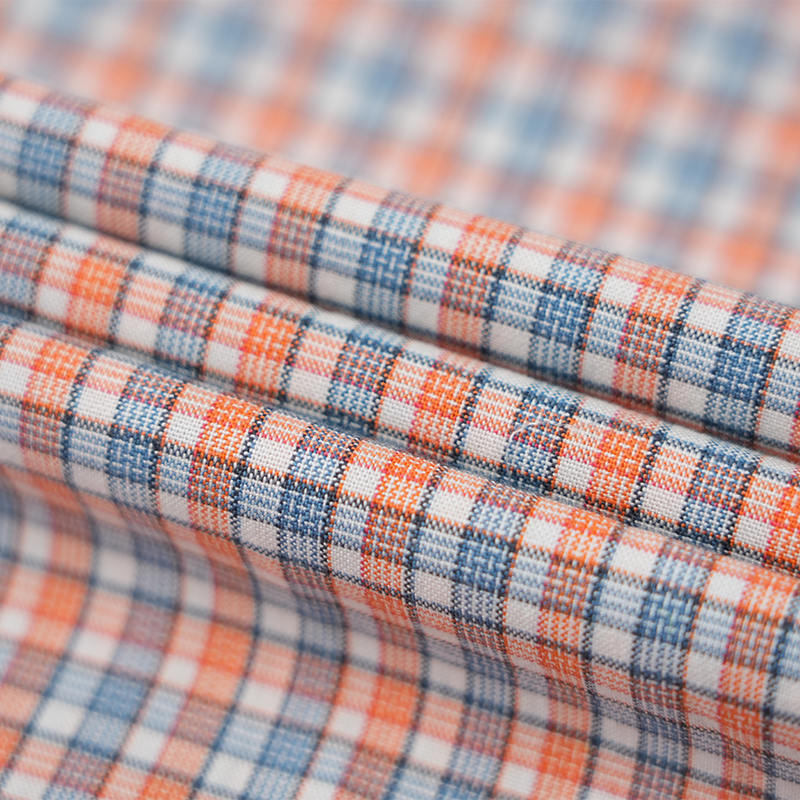 OEM/ODM Modacrylic Blended Flame-Retardant Fabric RangeExplore multi-fibre modacrylic blends with intrinsic flame retardancy, antistatic performance and moisture permeability for protective workwear and industrial safety applications.View Product →
What the standards require before a fabric can be called FR
A fabric is not FR because a mill says so. It is FR because a named laboratory tested a defined specimen to a defined method and the numbers fell inside a limit. The table below lists the standards that appear most often on polyester-based protective fabric certificates.
| Standard | Covers | What to confirm |
|---|---|---|
| EN ISO 11612 | Clothing protecting against heat and flame | Surface ignition test (ISO 15025 method A): afterflame and afterglow within 2 seconds, char length within 100 mm, no hole formation |
| EN ISO 11611 | Welding and allied processes | Class 1 or 2, plus molten droplet and radiant heat behaviour |
| NFPA 2112 | Industrial flash fire protection | Instrumented manikin result, no melting or dripping, char length to ASTM D6413 |
| IEC 61482-2 / ASTM F1959 | Electric arc thermal hazards | Arc rating (ATPV or ELIM) reported for the exact fabric construction |
| EN ISO 20471 / ANSI 107 | High-visibility clothing | Combined visibility and flame performance when the garment claims both |
| GB 8965.1 | Chinese flame-retardant protective clothing | Class A, B or C grading matched to the actual fabric weight tested |
Where flame-resistant polyester earns its place
FR polyester is not a substitute for aramid in every application, and pretending otherwise causes problems. It does well in three specific zones.
- High-visibility workwear. Modacrylic and FR polyester blends hold fluorescent shades and reflective tape while meeting heat and flame requirements, which is why they dominate road, rail and utility garments.
- Electrical work. Arc-rated garments are usually aramid-dominant, but FR polyester blends appear in lower-hazard layers and in coverall shells where an arc rating is documented for the assembly. Our guide to arc-protection flame retardant fabric explains how the rating is assigned.
- Oil, gas and petrochemical sites. Flash fire protection to NFPA 2112 or EN ISO 11612 with anti-static performance is a typical requirement, and blends that combine both are widely used.
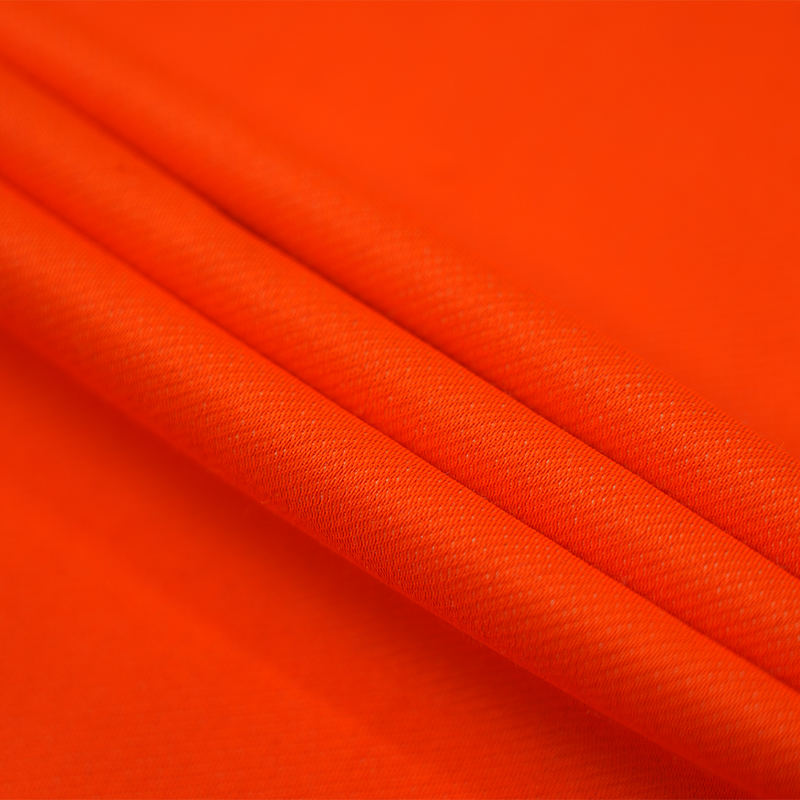 FR Hi-Vis Fabrics for Flame and Arc ProtectionHigh-visibility flame-retardant fabrics from 150 to 400 g/m², offered in aramid, modacrylic, FR viscose and polyester blends for industrial safety clothing.View Product →
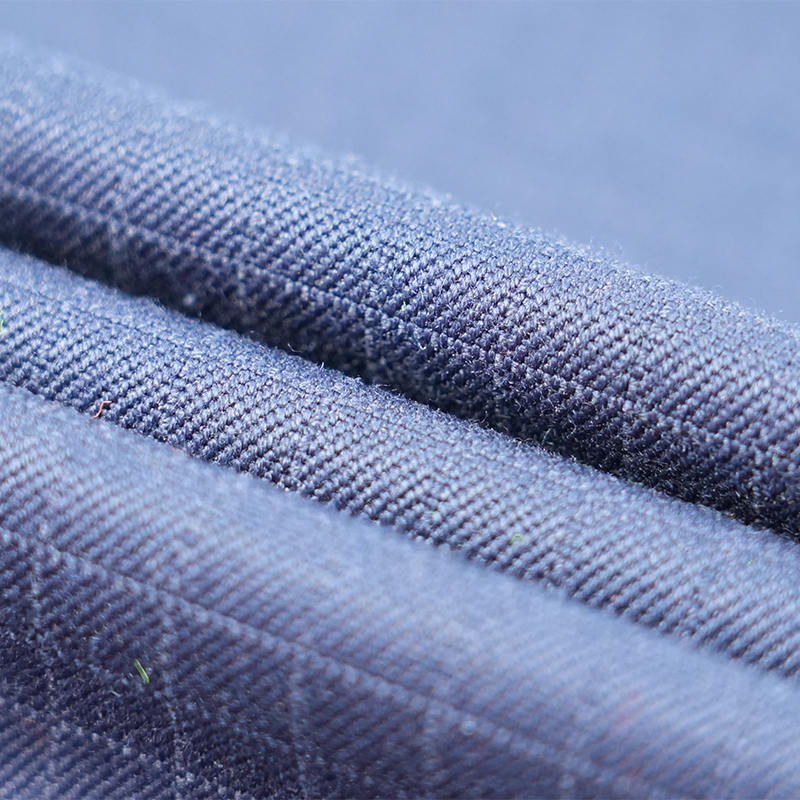 3H Electric Arc Protection FR Fabric RangeArc-resistant flame-retardant fabrics tested to EN 61482 box and open-arc methods, with anti-static and breathable options for power-industry protective clothing.View Product →
Six checks before you approve a polyester FR fabric
- Ask which standard and which test method, not simply whether the fabric is FR. "Passed flame test" is not a specification.
- Confirm the full fibre composition, including linings, pocketing, reflective tape, zips and thread. Non-FR trims undo a compliant shell.
- Request laundering durability data after a defined number of industrial cycles to EN ISO 15797, not just a wash or two at home.
- Check dimensional change and seam strength after washing. Buyers typically set their own limits around 3 percent, so agree the number in writing.
- Match the certificate to your exact fabric code, weight and shade. A certificate for a similar article is not a certificate for yours.
- Confirm the test laboratory and date. Reports older than a few years, or from an unrecognised lab, are difficult to defend during an audit.
How a three-layer FR polyester assembly works
In garments for flash fire and arc exposure, FR polyester rarely works alone. It usually sits in a layered system where each layer has a defined job. The diagram below shows the common arrangement.
The consequence for buyers is that a fabric test and a garment test answer different questions. A shell can pass EN ISO 11612 on its own and still fail as a finished assembly if the barrier is missing, the seams are weak or the reflective tape melts. On oil and gas sites where flash fire and vapour are both present, the same logic applies to FR fabric for oil and gas protection, where the thermal barrier must hold its shape after repeated industrial washing and contamination.
Where 3H Safety fits in the supply chain
3H Safety Technology Co Limited is a functional fabric manufacturer based on flame retardancy, operating under the product brand "3H. Safeloya" ®. The company is committed to product research and development and fabric production, and adds multiple functions such as anti-static, arc proof, metal splash proof and three-proofing according to customer needs. Its fabrics are widely used in petroleum, petrochemical, chemical, gas station, power, coal mining, steel, metallurgy and mechanical processing industries.
Related products have been tested by authoritative institutions including SGS in Switzerland, TUV in Germany, ITS in the UK and the National Labour Protection Products Quality Supervision and Inspection Center, and meet domestic and international standards such as EN ISO 11611, EN ISO 11612, EN ISO 1149, EN 469, EN 373, EN 61482-1, ASTM F1959, ASTM F1891, NFPA 70E, NFPA 2112, ANSI 107, GB 8965.1 and GB 12014. The company applies strict, comprehensive quality management and implements product lifecycle traceability in accordance with national regulations, so quality, environmental protection and hygiene remain consistent from lot to lot.