 EN
EN 中文简体
中文简体 English
 русский
 Español
 Português
 عربى
عربى


The purchase order says: "High-visibility vests, Type R Class 2, ANSI/ISEA 107-2015, 300 units." The quote comes back with garments labelled ANSI/ISEA 107-2020. Accept or reject?
Accept it, unless the contract locks the edition. The 2020 revision has replaced the 2015 edition, yet 2015 is still written into tenders, PPE programmes and older supplier datasheets, so it is worth knowing exactly what it required. Two numbers decide whether a hi-vis garment suits the job: the Type (the environment it is worn in) and the Class (how much fluorescent and retroreflective material it carries). Everything else in the standard supports those two numbers.
- The 2015 edition merged the general hi-vis standard and the public safety vest standard into one document.
- Type O, R and P describe the environment; Class 1, 2 and 3 describe the amount of visible material.
- Class 2 Type R is the common minimum on road and site work, and it is also the point where ANSI and EN ISO 20471 stop agreeing.
Content
- 1 What ANSI/ISEA 107-2015 Is, and Where It Applies
- 2 What Changed in the 2015 Edition
- 3 Types and Classes, Without the Jargon
- 4 ANSI/ISEA 107-2015 Versus EN ISO 20471
- 5 If Your Specification Still Cites the 2015 Edition
- 6 Why Hi-Vis and Flame Retardancy Rarely Live in the Same Fabric
- 7 Matching the Fabric to the Hazard
- 8 What to Put in the Purchase Specification
- 9 ANSI/ISEA 107 Questions Buyers Ask Most
What ANSI/ISEA 107-2015 Is, and Where It Applies
ANSI/ISEA 107 is a voluntary consensus standard for high-visibility safety apparel and accessories, developed by the International Safety Equipment Association and approved as an American National Standard. It sets material performance for the fluorescent background fabric and the retroreflective material, the minimum area of each, design rules, test methods, labelling and care instructions. The 2015 edition replaced the 2010 edition.
A voluntary standard becomes a purchasing requirement when a regulator incorporates it, an owner's specification cites it, or a contract makes it a condition of supply. In the United States, the Manual on Uniform Traffic Control Devices requires workers within the right-of-way of a federal-aid highway to wear high-visibility apparel meeting ANSI/ISEA 107 Class 2 or higher, and the OSHA construction signalling rule (29 CFR 1926.201) directs flaggers to warning garments of this type. On a private site the standard is a contract term rather than law — which is exactly why the edition on the label matters.
What Changed in the 2015 Edition
The headline change was convergence. Published summaries of the revision record that ANSI/ISEA 107 and ANSI/ISEA 207 — the separate public safety vest standard — were merged so that one document covers all high-visibility apparel and accessories. The rest of the revision tightened classification, testing and labelling.
- One standard for public safety. Garments previously certified to ANSI/ISEA 207 became Type P garments inside 107.
- Type designations. Type O (off-road), Type R (roadway) and Type P (public safety) were placed alongside Class 1, 2 and 3.
- Material and test updates. Background and retroreflective materials are assessed for performance after laundering, not only as new.
- Sizing and fit. Requirements aimed at keeping the specified material area on the garment as sizes increase.
- Labelling. A permanent label carrying Type, Class, the standard edition and care instructions, so a garment can still be verified years into service.
Practical consequence: a specification that says only "Class 2" is half a specification. Type O garments are Class 1, so a Class 2 requirement should always name Type R or Type P as well.
Types and Classes, Without the Jargon
| Type | Environment | Classes in the 2015 edition | Typical use |
|---|---|---|---|
| Type O | Off-road, away from vehicle traffic | Class 1 | Warehouse and yard work, loading bays, sites closed to public traffic |
| Type R | Roadway and work exposed to moving traffic | Class 1, 2 and 3 | Road works, utility crews, surveyors, flaggers, roadside delivery |
| Type P | Public safety activity | Class 2 and 3 (P2, P3) | Police, fire and EMS at incident scenes and traffic control points |
| Class | Background material | Retroreflective material | What it usually means on site |
|---|---|---|---|
| Class 1 | 0.14 m² | 0.10 m² | Lowest conspicuity; low-traffic and off-road tasks |
| Class 2 | 0.50 m² | 0.20 m² | The common minimum for roadway work |
| Class 3 | 0.80 m² | 0.20 m² | More background area plus banding on sleeves or legs; highest conspicuity |
- 1 Fluorescent background material — the minimum area rises with the class.
- 2 Retroreflective banding — certified for coefficient of retroreflection and wash durability.
- 3 Permanent label — Type, Class, standard edition and care instructions.
ANSI/ISEA 107-2015 Versus EN ISO 20471
If you buy for a multinational, you will meet both standards. Each uses three classes, and for Classes 1 and 3 the required areas line up closely. The gap opens at Class 2, where ANSI asks for noticeably more retroreflective material. A European Class 2 garment may therefore not satisfy an ANSI Class 2 requirement, and a test report cannot be converted from one system to the other.
| Requirement | ANSI/ISEA 107 (Type R) | EN ISO 20471 |
|---|---|---|
| Class 1 background | 0.14 m² | 0.14 m² |
| Class 1 retroreflective | 0.10 m² | 0.10 m² |
| Class 2 background | 0.50 m² | 0.50 m² |
| Class 2 retroreflective | 0.20 m² | 0.13 m² |
| Class 3 background | 0.80 m² | 0.80 m² |
| Class 3 retroreflective | 0.20 m² | 0.20 m² |
If Your Specification Still Cites the 2015 Edition
Editions of ANSI/ISEA 107 have appeared roughly every five years (2004, 2010, 2015, 2020), so a specification written around 2015 is not unusual — it is simply older. Five checks keep the purchase clean:
- Read the contract wording. "107-2015 or later" normally allows a 2020-certified garment; a clause naming the 2015 edition alone should be confirmed in writing before substitution.
- Check the label, not the brochure. A permanent label should show Type, Class and the standard edition, plus care instructions.
- Ask for fabric-level reports. Retroreflective performance and colourfastness belong to the material, not to a garment family.
- Watch after-care. A garment is only compliant while it still performs after its certified washing cycle — this is where low-cost products fail first.
- Record what you accepted and update the specification at the next revision cycle.
Why Hi-Vis and Flame Retardancy Rarely Live in the Same Fabric
Fluorescent yellow-green and orange-red depend on bright, light-fast dyes and a clean colour. Flame retardant chemistry often works against that: additives and back-coatings can dull the shade or reduce colourfastness, and the fluorescent colour has to stay inside tight chromaticity limits after washing. Retroreflective tape adds a second problem — most ordinary tapes are polymer-based and can melt and drip under heat, which is why dual-hazard garments need tape that is rated for the thermal hazard too.
That is also why a standard hi-vis vest worn over FR clothing is a recognised hazard rather than a solution: a melting synthetic outer layer can add to the burn injury underneath. If the site has both a visibility risk and a flash-fire, arc or molten-metal risk, the two requirements have to be engineered into one fabric, and evidence for both has to appear on the same test report.
3H Safety Technology Co Limited is a functional fabric manufacturer based on flame retardancy, with the company's product brand "3H. Safeloya" ®. The company is committed to product research and development and fabric production, and adds multiple functions such as anti-static, arc proof, metal splash proof, and three proofing according to customer needs. The product is widely used in various industries such as petroleum, petrochemical, chemical, gas station, power, coal mining, steel, metallurgy, and mechanical processing. The related products have been tested by authoritative testing institutions such as SGS in Switzerland, TUV in Germany, ITS in the UK, and the National Labor Protection Products Quality Supervision and Inspection Center, and have met the requirements of domestic and international standards, including EN ISO 11611, EN ISO 11612, EN ISO 1149, EN 469, EN 373, EN 61482-1, ASTM F1959, ASTM F1891, NFPA 70E, NFPA 2112, ANSI 107, GB 8965.1, and GB 12014. The company strictly requires comprehensive quality management, fully implements product lifecycle traceability in accordance with national regulations, achieves excellent product quality, environmental protection, and reliable hygiene, allowing customers and users to rest assured.
On the fabric side, the FR high-visibility range is built to carry the visibility requirement and the thermal requirement together. You can read more about how these fabrics are constructed and tested before you write them into a tender.
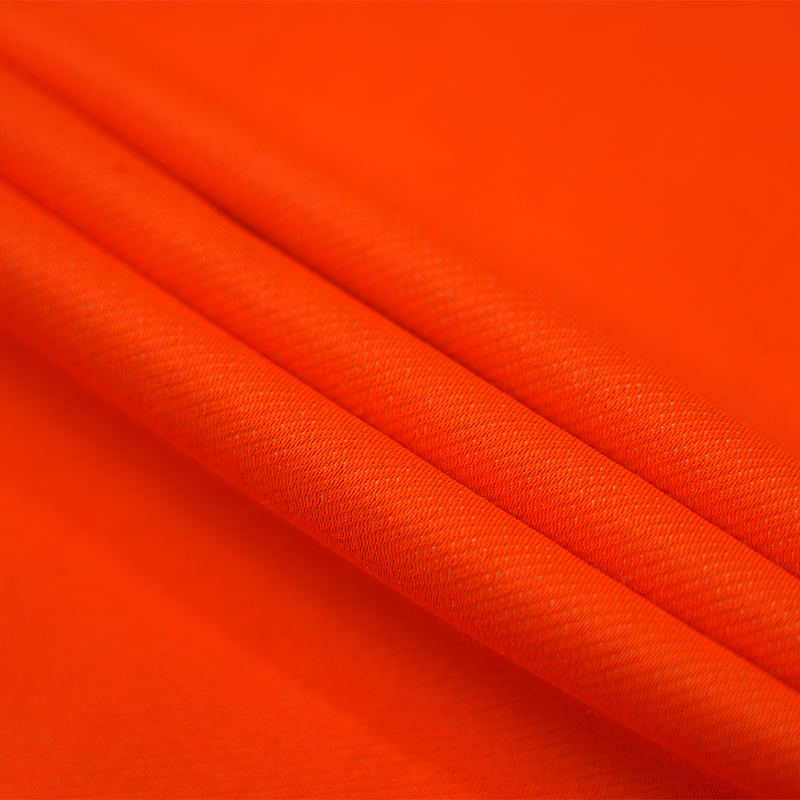 FR Hi-Vis Fabrics for Protective WorkwearExplore flame-retardant high-visibility fabrics for OEM protective clothing, combining visibility and thermal protection across transport, construction, petrochemical and power applications.View Product →
Matching the Fabric to the Hazard
Petrochemical sites, tank farms and gas stations
Here three hazards stack: flash fire, static discharge and vehicle movement. The fabric usually needs FR performance (for example EN ISO 11612 or NFPA 2112), anti-static behaviour (EN ISO 1149, GB 12014) and a certified high-visibility surface. Static control matters most where flammable vapour is present, because a spark from a garment is a credible ignition source.
QFU-05 Anti-Static FR Hi-Vis FabricReview this anti-static, flame-retardant, high-visibility woven fabric for petrochemical and power workers facing fire, arc flash, or static discharge risks.View Product →
Electrical work and arc flash
Where NFPA 70E or EN 61482-1 applies, the garment needs an arc rating as well as visibility, and the retroreflective tape must survive the arc exposure. If you are new to this combination, the practical starting point is understanding what arc-rated FR fabric actually is and how it is tested before comparing suppliers.
What to Put in the Purchase Specification
Vague specifications are the main reason hi-vis deliveries get rejected. Six lines remove most of the argument:
A reference point for that enquiry is a fabric such as the modacrylic, polyester and cellulose blend below, which is quoted against the visibility requirement as a finished material rather than as a garment promise.
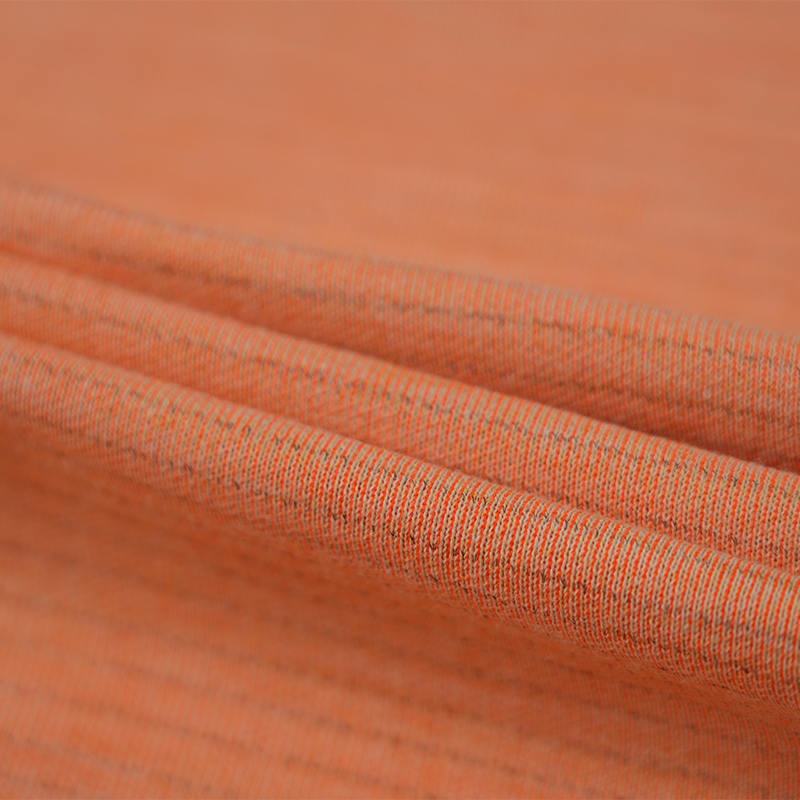 PIK-SM11 FR Hi-Vis Knitted FabricConsider this modacrylic, polyester and cellulose blend for finished hi-vis material, with inherent flame retardancy and after-wash performance for compliant workwear programmes.View Product →
ANSI/ISEA 107 Questions Buyers Ask Most
Back to the original question: the 2020-labelled vests are fine if your contract allows a later edition and the Type, Class and material areas still fit the work. What should never pass is a garment whose label says only "high visibility". Type, Class, edition and after-wash performance are the four details that separate a compliant delivery from a rejected one.